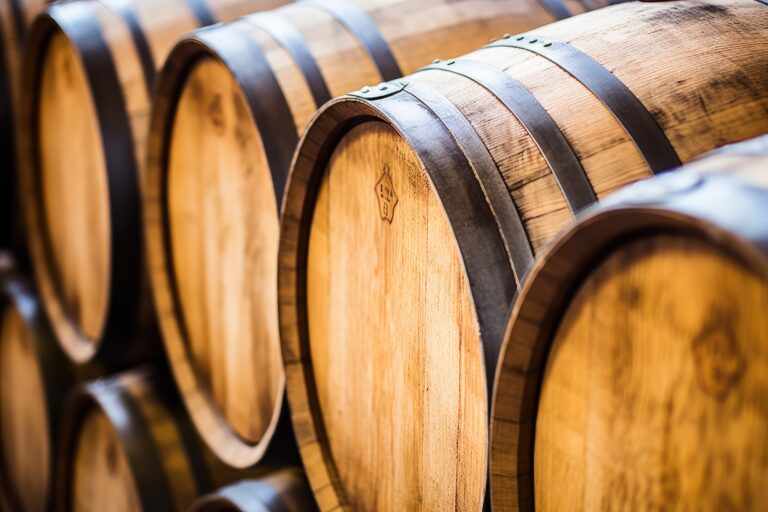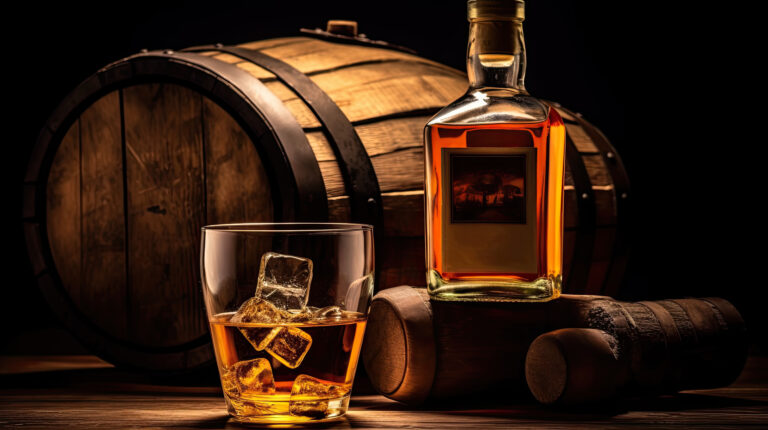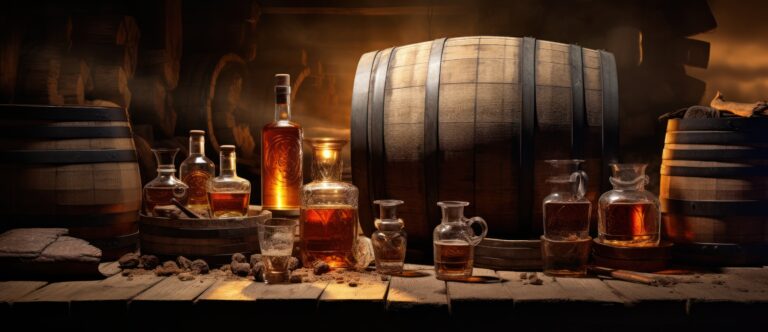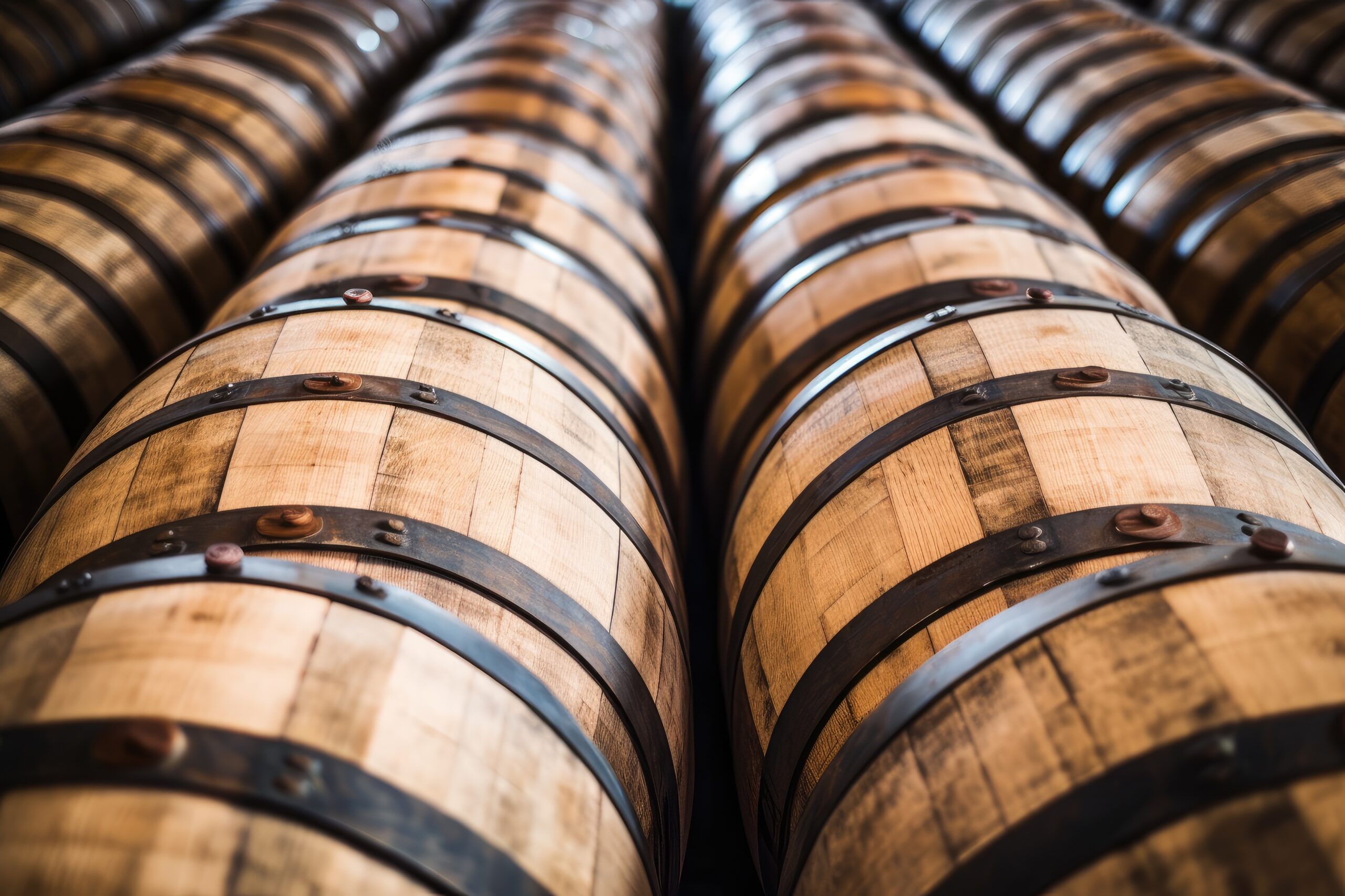
You walk into your favorite whiskey bar, the intoxicating smell of oak and smoke wafting through the air. Have you ever wondered just how much whiskey can fit in one of those massive barrels behind the bar?Barrels come in all shapes and sizes, but a standard whiskey barrel holds about 53 gallons of whiskey as it ages. That may seem like a lot, but when you consider that a barrel typically ages whiskey for at least 2-5 years, sometimes up to 50 years for an ultra-premium spirit, it really isn’t that much. Especially when you think about the fact that some of that whiskey evaporates over time, known as the “angels’ share”. The amount left after evaporation and aging is often only 60-70% of the original 53 gallons. Next time you belly up to the bar, consider raising a glass to the humble whiskey barrel—without it, your favorite tipple simply wouldn’t exist.
Introduction: The Allure of Whiskey Barrels
There’s something magical about whiskey barrels. Once used to age bourbon or scotch, the wood imparts a golden amber color and oaky, vanilla-tinged flavor to the distilled spirit. No wonder barrel-aged whiskey has become such a sought-after delicacy.
For years, distillers have relied on barrels to naturally mellow and enhance the flavor of their whiskeys. As the spirit soaks into the wood, it absorbs the compounds that give bourbon its distinctive caramel sweetness and rye its spicy kick. Meanwhile, some of the alcohol evaporates, resulting in a smoother, more complex taste.
Barrel aging is really an art form. Master distillers carefully select barrels based on the flavor profiles they want to achieve. They then age the whiskey for just the right amount of time to cultivate the distinctive tastes their customers crave. For whiskey connoisseurs, each brand offers a unique experience to savor and enjoy.
Whether you prefer the bold, full-bodied taste of bourbon or the subtle hints of citrus and clove in a single malt scotch, there’s no denying the role that barrels play in creating some of the world’s finest and most sought-after spirits. For whiskey lovers, that first sip of an aged, barrel-influenced dram is a pleasure like no other.
What Is a Fifth of Whiskey?
A fifth is a standard bottle size for distilled spirits in the US, holding 25.36 ounces or 750 milliliters of liquid. That’s a lot of whiskey! But how many fifths actually fit in a barrel?
- Barrel sizes vary, but a typical whiskey barrel holds around 50-60 gallons.
- Since there are 3.78 liters in a gallon, that works out to around 189-227 liters in a barrel.
- Divide that by the 0.75 liters in a fifth, and you’ll find that a barrel holds about 252-302 fifths. That’s a lot of whiskey!
Of course, barrels are never completely filled – distillers leave air space for the whiskey to breathe and interact with the charred oak. Adding in that variable, you’re probably looking at 200-250 fifths in a standard whiskey barrel.
Still, that’s enough hooch to keep you and a couple hundred of your closest friends happy for quite a while! The next time you sip a glass of bourbon or Scotch, think about the fact that it started out as one of hundreds of bottles blended together in a single barrel. That first sip is the culmination of a long journey to your glass.
Standard Whiskey Barrel Sizes
Standard whiskey barrels come in a few typical sizes. The most common are:
- 53 gallons – The standard US barrel size. This produces about 150-200 bottles of whiskey.
- 63 gallons – A popular size for aging whiskey and bourbon. Yields around 220-250 bottles.
- 100 gallons – For larger scale aging and blending. Produces 350-400 bottles.
Of course, some distilleries use custom barrel sizes for their needs. The specific charred oak barrels used, along with factors like aging location, significantly impact the flavor of the final product. The interaction between wood and spirit is complex, leading to a variety of aromas and tastes in the finished whiskey.
Calculating Total Volume of a Barrel
To determine how many fifths of whiskey will fit in a barrel, you first need to calculate the total volume of the barrel. A typical whiskey barrel holds 53 gallons.
Since there are 4 quarts in a gallon, a 53-gallon barrel holds 212 quarts of liquid.
A fifth contains 25.6 ounces or 0.8 liters. Since there are 33.8 ounces in a quart and 4 quarts in a gallon, 212 quarts would be equivalent to 799.36 ounces.
Dividing 799.36 ounces by 25.6 ounces per fifth gives you 31.2 fifths.
So you can expect a full 53-gallon whiskey barrel to yield about 31 fifths of whiskey once bottled. That’s a lot of whiskey! The actual number may vary slightly based on factors like barrel shape, wood type, and aging time. But as a rule of thumb, 30-32 fifths is a good estimate for a standard full-sized whiskey barrel.
Converting Gallons to Fifths
A standard oak whiskey barrel holds about 53 gallons of liquid. If a barrel holds 53 gallons, how many fifths (750 ml bottles) of whiskey will that produce? Let’s do the math.
There are 3.785 liters in a gallon. So 53 gallons is equal to 53 * 3.785 = 200.305 liters.
A fifth contains 750 ml or 0.75 liters. So we can calculate the number of fifths in 200.305 liters like this:
200.305 liters / 0.75 liters per fifth = 267 fifths
So a full 53-gallon barrel should yield about 267 standard fifths (750 ml) bottles of whiskey. Of course, a small amount of the barrel’s contents is lost to evaporation (the “angel’s share”) during aging, so you’ll typically end up with a few less bottles than that. But you get the idea.
Next time someone asks you how many fifths are in a barrel, you’ll know the answer is in the neighborhood of 260. And now you can impress your friends with your whiskey barrel conversion skills!
The Math: Figuring Out How Many Fifths Fit
To figure out how many fifths of whiskey will fit in a barrel, you need to do some simple math.
A standard whiskey barrel holds 53 gallons of liquid. Since there are 3.78 liters in a gallon, that comes out to around 200 liters in a full barrel.
A fifth of whiskey is 750 milliliters. So if you divide the 200 liters in the barrel by the 0.75 liters in a fifth, you get 266. That means a single whiskey barrel can hold 266 fifths of whiskey when full.
Of course, as the whiskey ages, some is lost to evaporation – this is known as the “angel’s share.” The longer it ages, the more volume is lost. After several years of aging, a barrel may yield 230-250 fifths. But when first filled, you can expect around 266 fifths to fit in a standard 53-gallon whiskey barrel.
So the next time you see a full whiskey barrel, you can impress your friends with the fact that it likely holds well over 200 liters or 50 gallons of whiskey, which works out to be enough for hundreds of nights of smooth sipping and good conversation!
Fun Facts About Whiskey Barrels
When it comes to whiskey, the barrel is just as important as the spirit itself. Barrels impart flavor, aroma, and color to the distillate during aging. Here are some fascinating facts about these oak vessels:
- Whiskey barrels were originally used to transport goods, then repurposed for aging spirits. Distillers discovered the barrels added flavor and mellowness to the distillate.
- Barrels are made of oak, usually American white oak or European oak. Oak lends vanilla and caramel notes to the whiskey.
- A barrel contains roughly 53 gallons of whiskey. This size was originally chosen because it was easy to transport by horse and buggy.
- As whiskey ages in the barrel, it expands and contracts with temperature changes. This is known as the “angel’s share” and allows flavor compounds to infuse into the spirit. Up to 30% of the barrel’s volume can be lost to evaporation during aging.
- Barrels can only be used a few times before they lose their ability to impart flavor. Many are recycled into furniture, crafts or used as planters.
- A barrel’s char or toast level affects the flavor. More char means bolder, smokier flavors in the whiskey. Lighter toasts produce subtler, sweeter flavors.
- Barrels require maintenance like replacing hoops and staves. A cooper, or barrel maker, keeps barrels in working order during the aging process.
Whiskey and barrels go hand in hand. These wooden vessels create the familiar taste we know and love in our favorite aged spirits. Next time you sip a glass of whiskey, thank the humble barrel that gave it such character and flavor.
Other Common Whiskey Container Sizes
Other common whiskey container sizes include:
- Barrels: Whiskey barrels, also known as casks, are a very popular size for aging and storing whiskey. Barrels typically hold between 31 to 55 gallons of whiskey.
- Hogsheads: A hogshead is a large cask that holds between 54 to 66 gallons. Hogsheads were commonly used in the past but today barrels are more popular.
- Puncheons: A puncheon is a large cask that holds between 70 to 90 gallons. Like hogsheads, puncheons were more popular in the past and today barrels are typically preferred.
- Bottles: Of course, the most common way for people to purchase and consume whiskey is in glass bottles. Bottle sizes vary but a standard bottle holds 750 milliliters or 25.4 ounces, which works out to just over 5/8 of a gallon.
As you can see, there are various traditional whiskey container sizes, though today the most popular sizes are barrels for aging and standard sized bottles for selling and drinking. The exact container used depends on the distiller and type of whiskey being produced. But no matter the size, what’s most important is that wonderful amber liquid inside!
FAQ: Answering Common Questions About Whiskey Barrels
How many fifths of whiskey can a barrel hold?
- A standard whiskey barrel holds about 53 gallons of liquid, which equates to roughly 250 bottles of whiskey. The exact amount depends on the particular barrel and can vary slightly, but a good rule of thumb is that a barrel will yield around 9,000 ounces of whiskey.
How long does whiskey age in a barrel?
- Whiskey can age for a minimum of 2 years up to 50 years or more depending on the type. Bourbon whiskies must be aged at least 2 years. Scotch whiskies are typically aged 3 years and up. More premium whiskies are often aged 10-25 years to achieve a smooth, complex flavor.
What types of barrels are used to age whiskey?
- The most common barrels used are made of charred American white oak. Bourbon by law must be aged in new charred oak barrels. Other whiskies can use used bourbon barrels. Some distillers also use barrels that previously held other spirits like rum, port or sherry to impart different flavors.
Does the barrel material affect the flavor?
- Yes, the barrel has a huge impact on a whiskey’s flavor. The charred oak barrels impart vanilla, coconut and caramel notes. As the whiskey interacts with the wood over time, the barrel adds color and helps mellow the flavor through oxidation and evaporation. About 2% of the barrel’s contents are lost each year through evaporation, which is known as the “angel’s share”.
Can used whiskey barrels be repurposed?
- Used whiskey barrels are often repurposed for aging other spirits or wines, or made into decor and furniture. The leftover oak staves and wood chips are also used to flavor wines, beers, vinegars and sauces to impart a whiskey flavor. Nothing goes to waste!
Final Thoughts
So there you have it, the not-so-straightforward answer to how many fifths of whiskey fit in a standard barrel. As with most things in life, it’s complicated. But when it comes down to enjoying a quality aged whiskey, does the exact number really matter? At the end of the day, we should focus on appreciating the craftsmanship and flavor in each bottle. The distillers and blenders have spent years, often decades, perfecting their recipes and technique to create an exceptional product. Instead of worrying so much about metrics and measurements, sit back, take a sip, and savor the taste. Some mysteries are better left unsolved.